ZERO Runtime · The control layer for the agentic age

Software learned to act.Now it needs a warrant.

Newtonian Standard binds a consequential action to a verified-present human — so it cannot be replayed, redirected, or forged. Not even by the operator running the platform.

Proven on live hardware. Licensed a layer beneath the applications that need it.

Received. We reply within one business day.
The primitive

General Attestation

A capable agent with no proof of authority is a confused deputy with a checkbook. Attestation is the control layer for the agentic age — the warrant that gates every consequential action: one action, welded to four things at once, refused the moment any of them doesn't hold.

What every action is bound to

  • 1A verified-present humanPresence is a live fact at the moment of action, not a stored token
  • 2The exact bytes of the actionThe approval describes this wire, this amount, this recipient — nothing else
  • 3A freshness windowValid for seconds, not forever; a late replay is a dead letter
  • 4Single useSpent on execution; it cannot authorize a second transaction
action_bound · single_use · fresh
The warrant is signed with a key the operator never holds — so it cannot be forged from inside.
Tap to arm the warrant
Warrant issued · action-bound

      
live attack run  ·  authorized action: wire $250,000 → ACME-LLC  ·  then four attempts to abuse it
authorize
Present human attests the wire to ACMEWelded to its exact bytes, a freshness window, single use
Executes
replay
Re-submit the same authorizationCaptured token replayed against a repeat transaction
Refused
transplant
Move the ACME approval onto wire $999,999 → ATTACKERThe "approve one thing, execute another" attack
Refused
forge
Mint an authorization the operator never issuedOperator with full database access attempts it
Refused
stale
Use an authorization after its window closedExpired approval re-presented later
Refused

One legitimate action in, four attacks out — each refused by construction, not by policy review. The transplant fails because the approval is welded to the ACME bytes; the replay fails because it is single-use; the forge fails for want of a signature the operator cannot produce; the stale attempt fails on freshness. This exact run was executed on the live platform and is independently hash-anchored. Filed as 64/105,111 — Identity-Fused Presence Binding (July 4, 2026).

The identity wedge

OLEK — OAuth-bound Liveness Encryption Key

The "verified-present human" in every attestation is not a password and not a device. It is biology, fused to a resolved identity — a presence factor on top of the SSO you already run.

G
OAuth identity The subject already resolved by Google, Okta, or Entra
+
fused
Liveness key (LEK) A live biological presence signal, unique to the person
OLEK = HMAC( liveness, oauth_subject )  →  the same biology under two accounts yields two cryptographically distinct keys
Why it works with SSO

OLEK is a factor added on top of the identity provider — never a replacement. We humanize SAML through physics; Okta, Entra, and Google keep doing what they do.

Why it scales honestly

It is a 1:1 binding on an already-resolved identity, not 1:N identification against a population. It scales as OAuth scales — the population-matching problem never enters the v1 job.

Every input is a sensor.

The identity binding rides on biology the operator cannot fake — an 8–12 Hz neuromuscular tremor signal, derived inside the substrate, fused across four channels, never crossing to the host. Proven at the architecture level; the sensor surfaces beyond the mouse are roadmap.

Every mouse is a sensor. The LEK derives from biology the operator cannot fake. S1 S2 S3 IMU CHANNEL 01 8–12 Hz neuromuscular tremor involuntary signal · physiological ground truth derived inside the substrate · never crosses X Y Z CHANNEL 02 IMU motion vectors 3-axis orientation · continuous fused with strain at the substrate edge S1 S2 S3 CHANNEL 03 multi-channel strain fusion 3-channel piezo · grip-force pattern 1/f slope · sub-1 Hz drift · peak prominence CHANNEL 04 optical position high-rate XY tracking · surface-agnostic fused trajectory anchors the biology signal LEK · LIVENESS ENCRYPTION KEY Continuous involuntary biology, derived inside the substrate, fused across four channels. No verdict leaves without the human present. No biometric vector ever crosses. 80+ provisional filings · priority Feb 4, 2026 Physics always wins.
Mouse

Every mouse is a sensor.

Strain gauges, IMU, optical. Four-channel fusion derives the 8–12 Hz neuromuscular tremor signal the hand cannot fake.

Proven · Architecture
Touch screen

Every screen is a sensor.

Capacitive touch deltas, accelerometer, gyroscope. Your phone already captures the same biological signal — today it leaves the device. LEK keeps it inside.

Roadmap · Mobile substrate
Keyboard

Every keystroke is a signal.

Dwell time, flight time, key pressure. Decades of keystroke-dynamics research, sovereign at the substrate. Per-user identification, continuous.

Roadmap · OEM partners
80+ provisional filings · first priority date February 4, 2026
Architecture proven at the substrate · multi-channel fusion (strain · IMU · optical · audio) extends through Q3 2026 academic-partner validation
What holds it up

The substrate beneath the warrant.

Attestation and OLEK are real because of the floor they stand on: memory that refuses to be read while it computes. Licensed a layer beneath everyone else.

Liveness Encryption Key · neuromuscular tremor signature band · 8–12 Hz
8–12 Hz
0 Hz48121620 Hz

The involuntary signal, visualized. An 8–12 Hz neuromuscular tremor — the physiological ground truth the LEK derives from, refused to the host and computed inside the substrate. Illustrative visualization of the signature band.

Proven cross-architecture
The floor — Layer Zero

Memory that refuses to be read.

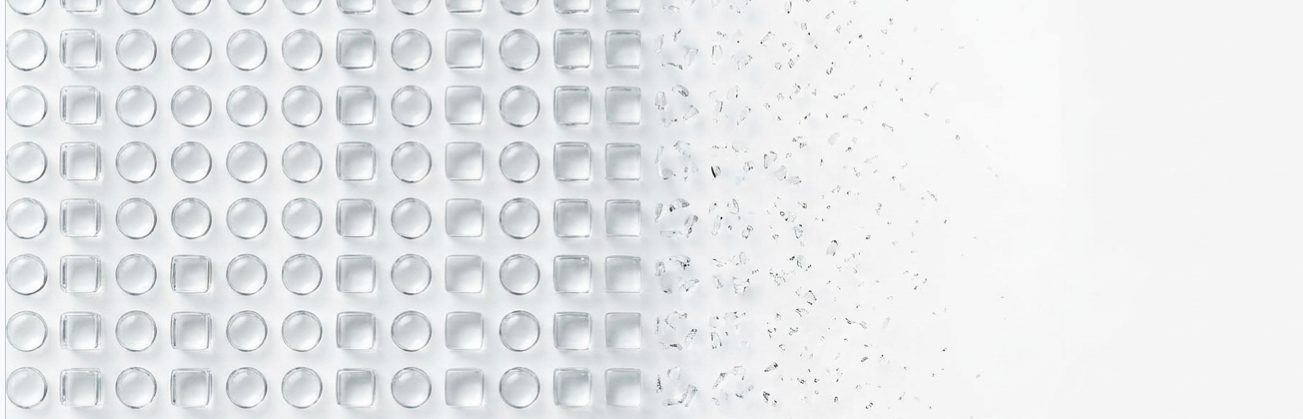
A region of the NVIDIA GPU where host-originated reads are refused — returned as an I/O error, not data — while compute runs on that same memory. What an adversary sees is the Ghost Plane (reads refused); the engineered sovereign substrate that makes the guarantee structural is the Glass Plane. It makes a sovereign vault (data with no key an operator can seize) and sovereign inference (a model running on data the host cannot read) real. Not encryption, not a secure enclave, not a driver setting — a property of the machine, licensed a layer beneath.

Honest boundary: the everyday refusal is software-mediated (driver resource claim; STRICT_DEVMEM), and a privileged operator who unbinds the driver can map the framebuffer window — but the boundary closing off the rest of VRAM holds. The S-Chip — the property engineered into sovereign silicon — is what closes that last edge: with the refusal built into the device, there is no driver to unbind and no software boundary holding the last mile. That is what turns the guarantee from proven-on-NVIDIA into defensible by construction all the way down.

Proven by inspection
The trust wrapper — First Person Operations

Run the platform. Still can't see the human.

The operator who runs the estate cannot observe the human or forge their authority. Proven by adversarial inspection: the operator's own database holds only pointers and proofs — no biosignal, no keys. A hand-forged authorization is rejected; the presence tier cannot be silently upgraded. Observe the business, never observe the human. FPO is a reference implementation demonstrating operator/tenant separation on the substrate — a working demonstration of what licensees build, not a scaled product.

Roadmap
The horizon — S-Chip

Sovereign silicon, in development.

The Layer Zero property engineered into a chip rather than observed on someone else's — a RISC-V sovereign substrate that turns the guarantee from an observed behavior into a structural one. The off-NVIDIA generalization is filed as IP (Sovereign Substrate Emulator); the S-Chip is where it becomes a licensable hardware standard. Today the property is proven on NVIDIA; the S-Chip is how it becomes vendor-independent.

The credibility engine

What is proven, and what is ahead.

The discipline is the moat. What is reproduced is stated flatly; what is roadmap is labeled roadmap. Every proven line can be inspected — which is what makes the roadmap worth believing.

Capability
Status
Substrate non-observability, cross-architectureReads refused (I/O error) while compute runs — Blackwell + Lovelace, 99.98% / 99.97%
Proven
Sovereign vault — key never leaves the substrateIn-substrate seal; master key resident for the whole operation; byte-perfect round-trip
Proven
General Attestation — action-bound warrantAction-bytes + freshness + single-use + forge-resistance, on a real action
Proven
Action requires live presenceSame warrant honored while present, refused on departure, restored on return
Proven
Operator-plane integrity (FPO)Operator cannot observe the human or forge authority — by inspection
Proven
OLEK — biological presence bound to OAuthBlind discrimination, two enrolled principals; 1:1 on a resolved identity
Proven
OLEK population-scale characterizationFalse-accept/reject across a large population — a Series-A diligence answer
Roadmap
Live-tremor presence sensorThe next build: moving presence from the behavioral reference tier to the live biometric that drives the gate
Next
First Person AgentAn autonomous agent that consumes the attestation primitive — what licensees build
Roadmap
S-Chip — sovereign siliconSSE off-NVIDIA generalization filed; FPGA prototype in progress
Roadmap
Where we sit

We work with your identity providers — Okta, Entra, Google. We never replace them.

We humanize SAML through physics: biology becomes the authentication factor on top of the SSO you already run. Newtonian Standard licenses the primitive; partners build the product on top. We end where they begin.

Request access

Tell us where you'd deploy the primitive. We reply within one business day.

Physics Always Wins. nO/O
Calibration. Reads are refused (I/O error), not zeros. Substrate figures 99.98% Blackwell / 99.97% Lovelace, proven cross-architecture. Mechanism is a working hypothesis — hardware-gated below the driver, not attributed at the silicon level. OLEK proven with two enrolled principals; population-scale characterization and the live-tremor sensor are roadmap, and today's presence signal is the behavioral reference tier. General Attestation is proven as a reference implementation on the live platform; the First Person Agent and S-Chip sovereign silicon are roadmap. 80+ provisional filings; first priority date February 4, 2026; newest filing 64/105,111 (Identity-Fused Presence Binding), July 4, 2026. Newtonian Standard works with identity providers, never replaces them.